The Art of Axel Ebbe
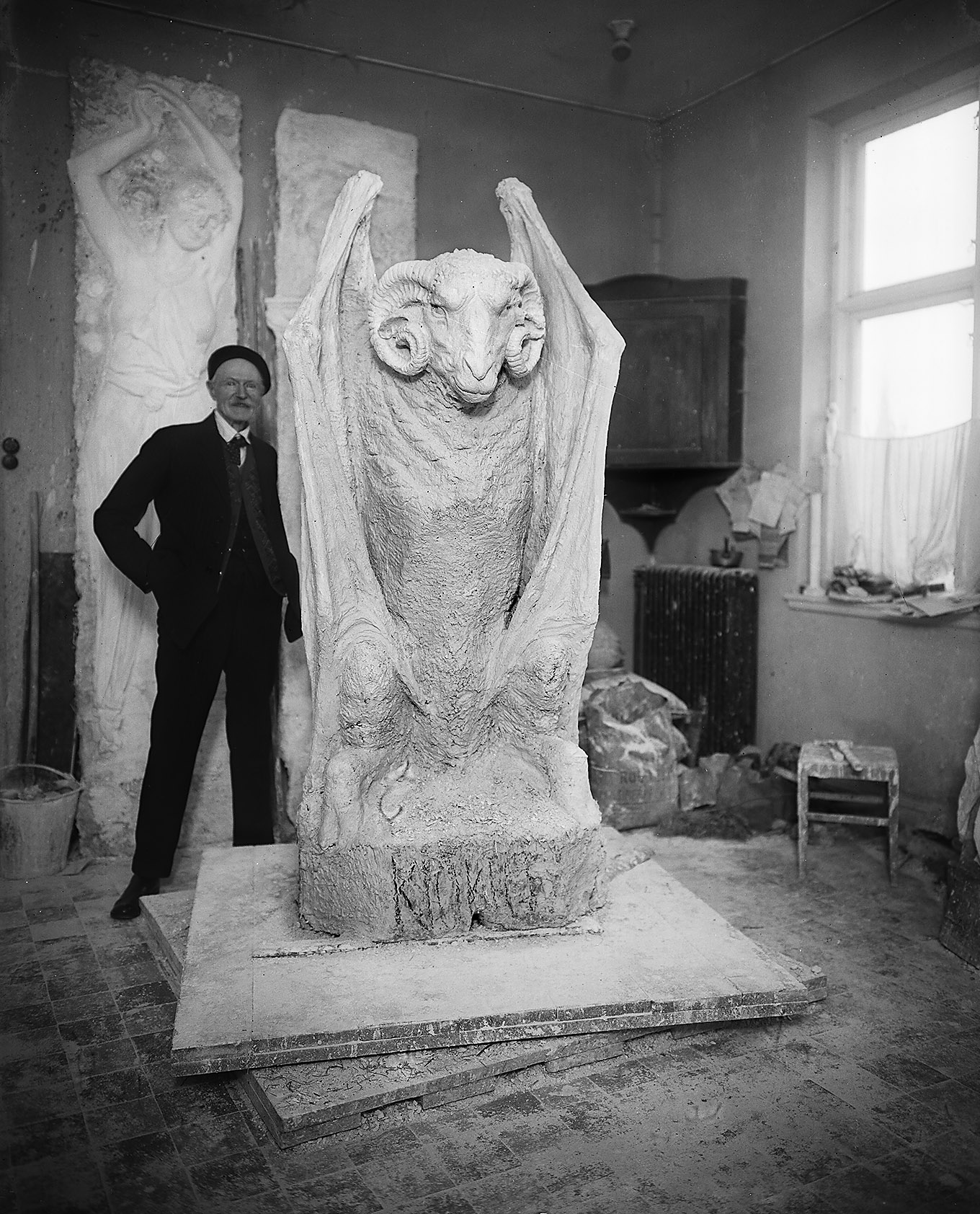
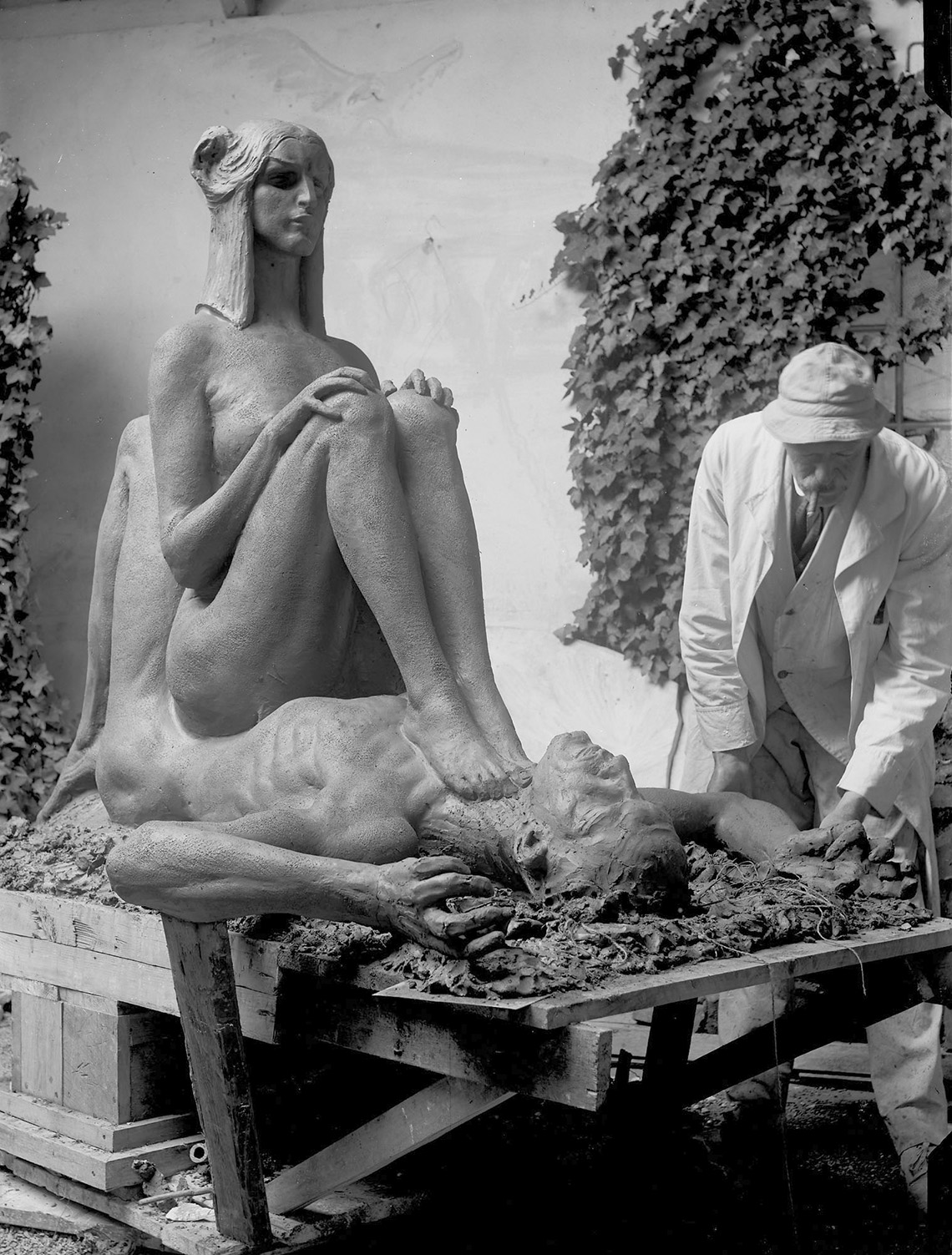
Axel Ebbe is perhaps best known for his sculptures, which grace many of the major cities in Skåne. Arbetets ära in Malmö, Mannen som bryter sig ur klippan in Lund, and Sjöormen in Stortorget, Trelleborg are just a few from the extensive list – all of which have become natural meeting points and landmarks in their respective cities.
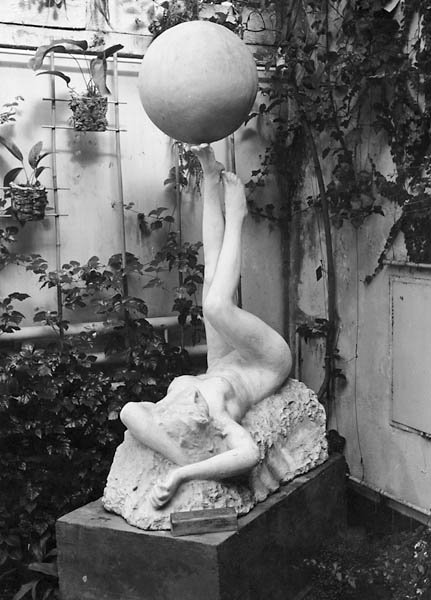
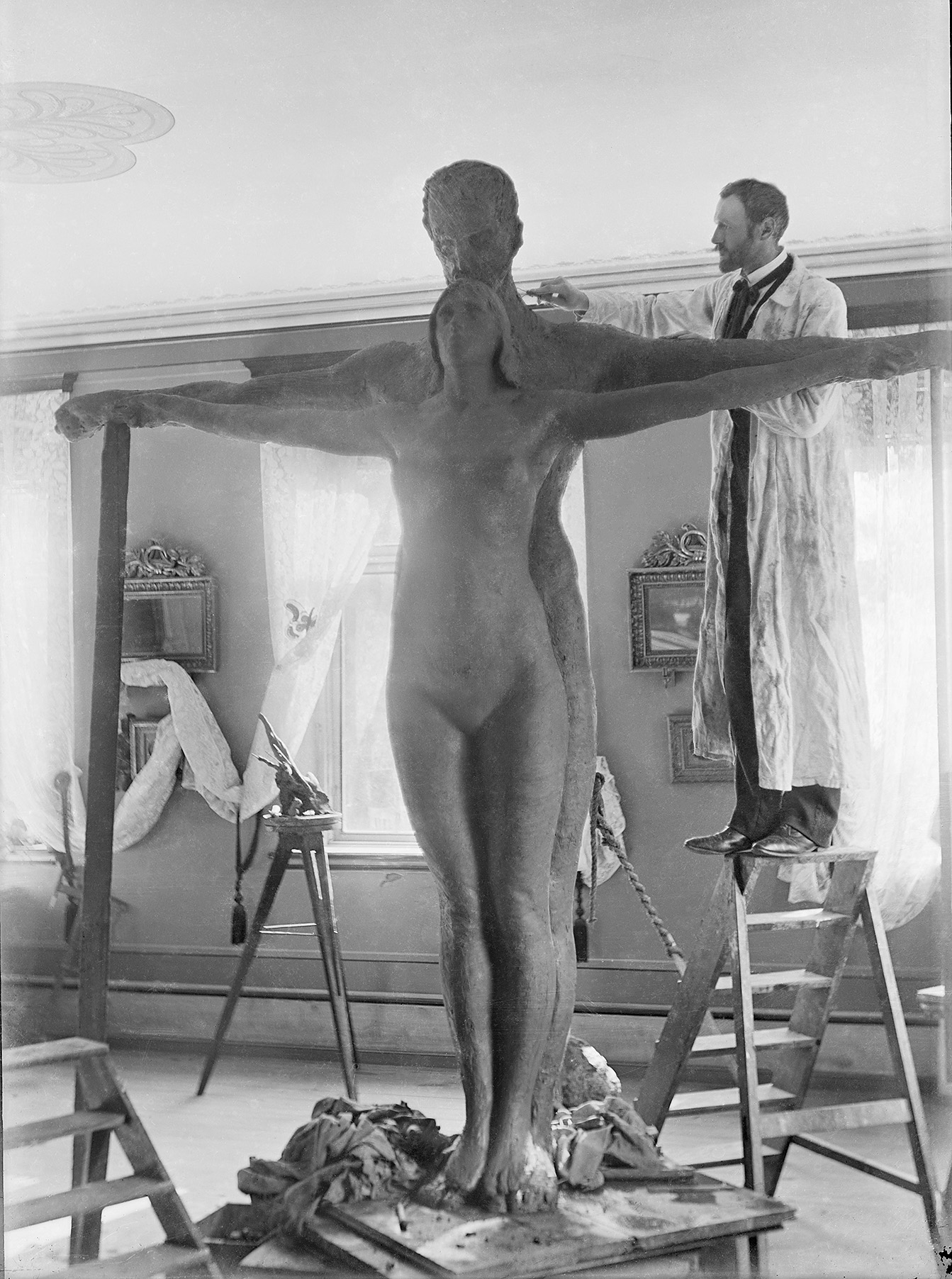
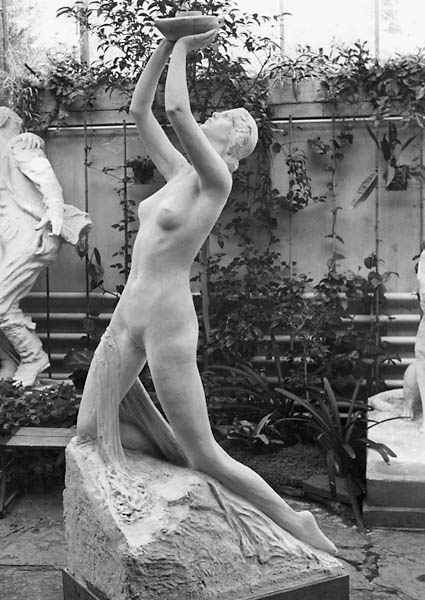
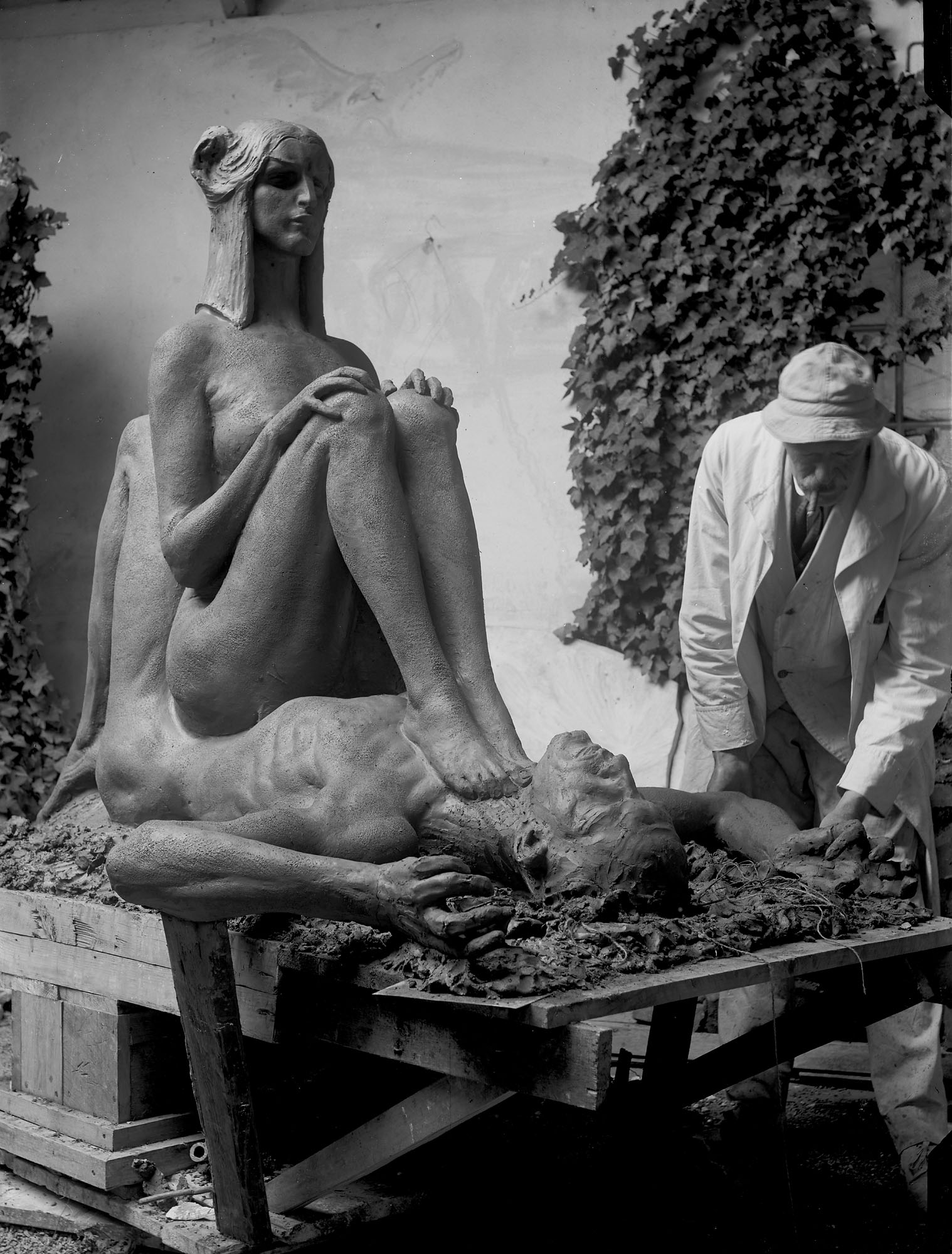
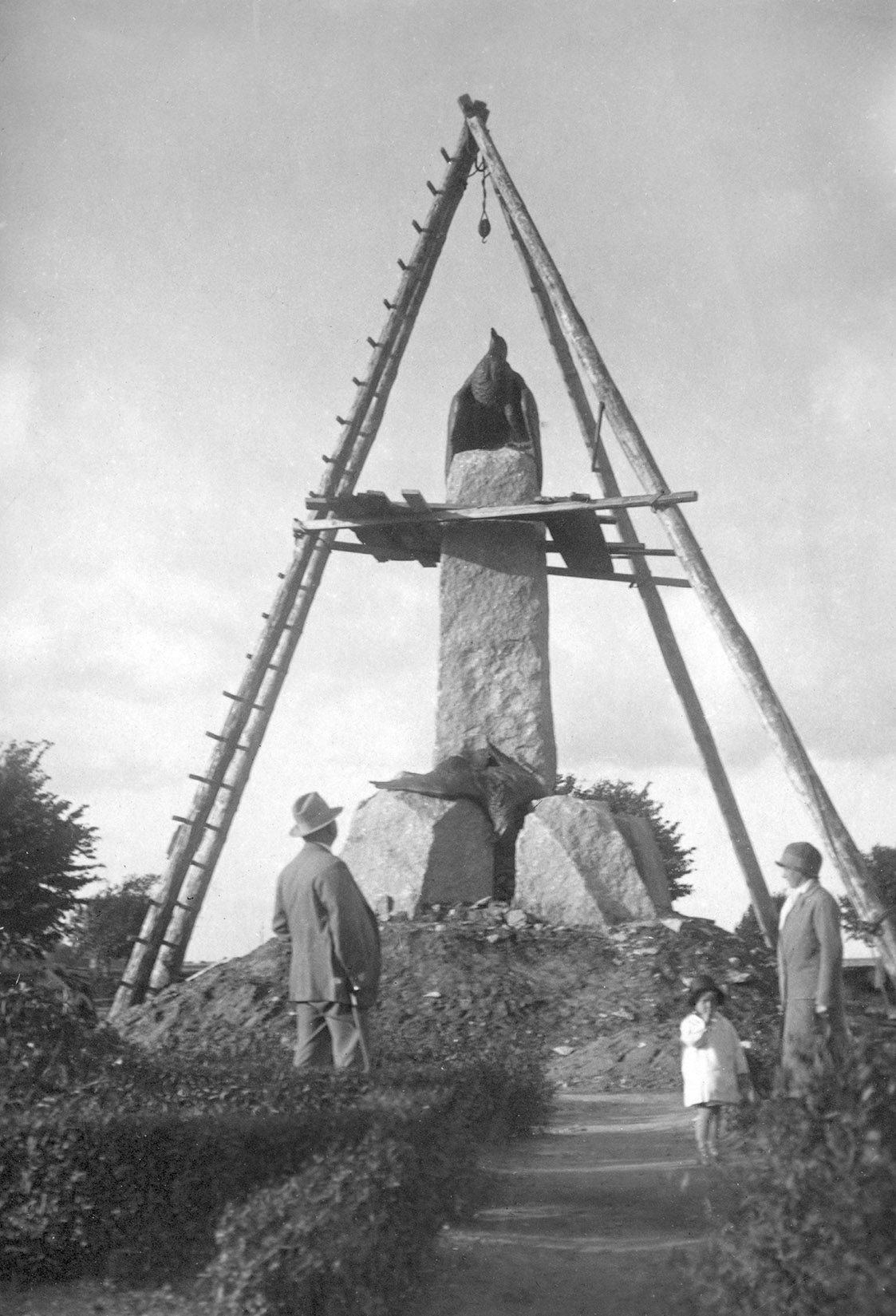
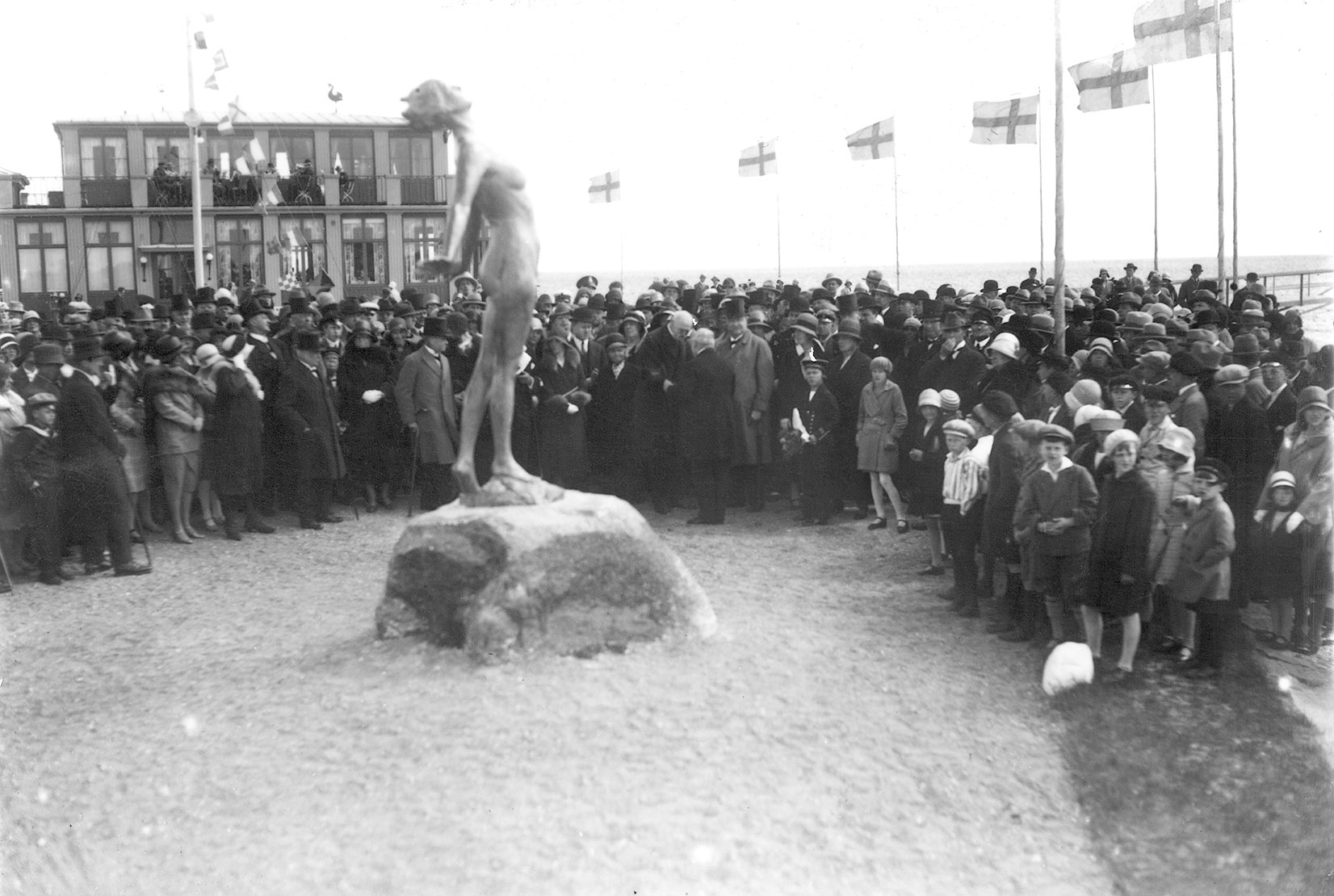

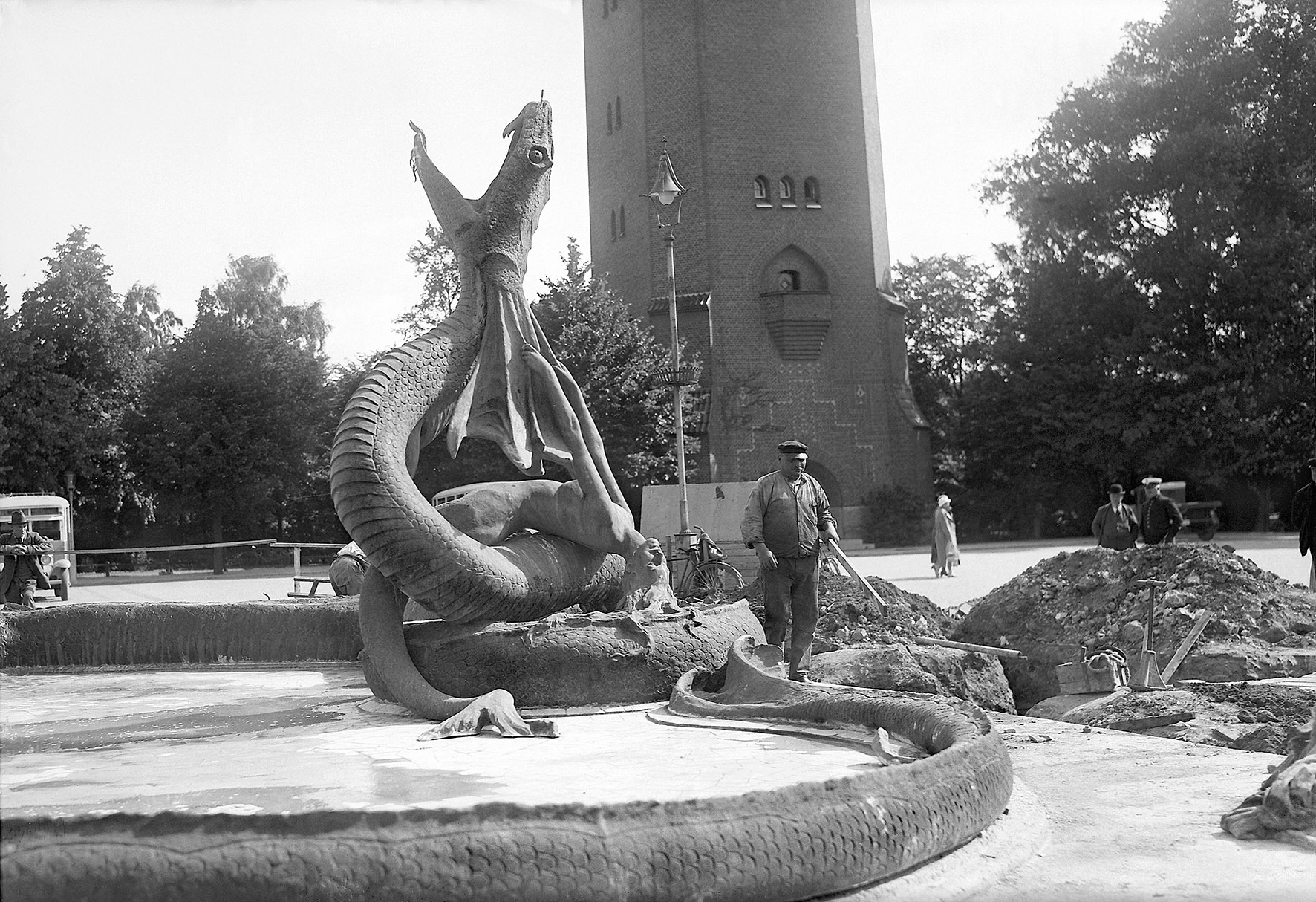
Axel Ebbe was a versatile artist who employed a wide range of artistic expressions and techniques to create his work. He was a skilled sculptor, painter, printmaker, illustrator, and, not least, a writer.
Painting was likely the first artistic medium Axel Ebbe encountered. In the late 1880s, he studied painting under artist Fredrik Krebs while also pursuing academic studies at Lund University. Over the years, his paintings developed into a style characterized by a dark color palette and satirical undertones.
His life took a new turn in Lund when he first worked with clay. There, he connected with the Norwegian-Danish artist Stephan Sinding and joined his sculpture school.
In Ebbe’s early sculptural work, one can see influences of Symbolism and Art Nouveau. The pieces are built around a clear conceptual foundation, often exploring themes of duality or contrast—such as male and female, good and evil, beauty and ugliness, or light and darkness.
Later in life, Ebbe developed a different sculptural style—more provincial, humorous, and rooted in folk tradition and local culture. This approach was most prominent in his smaller sculptures.


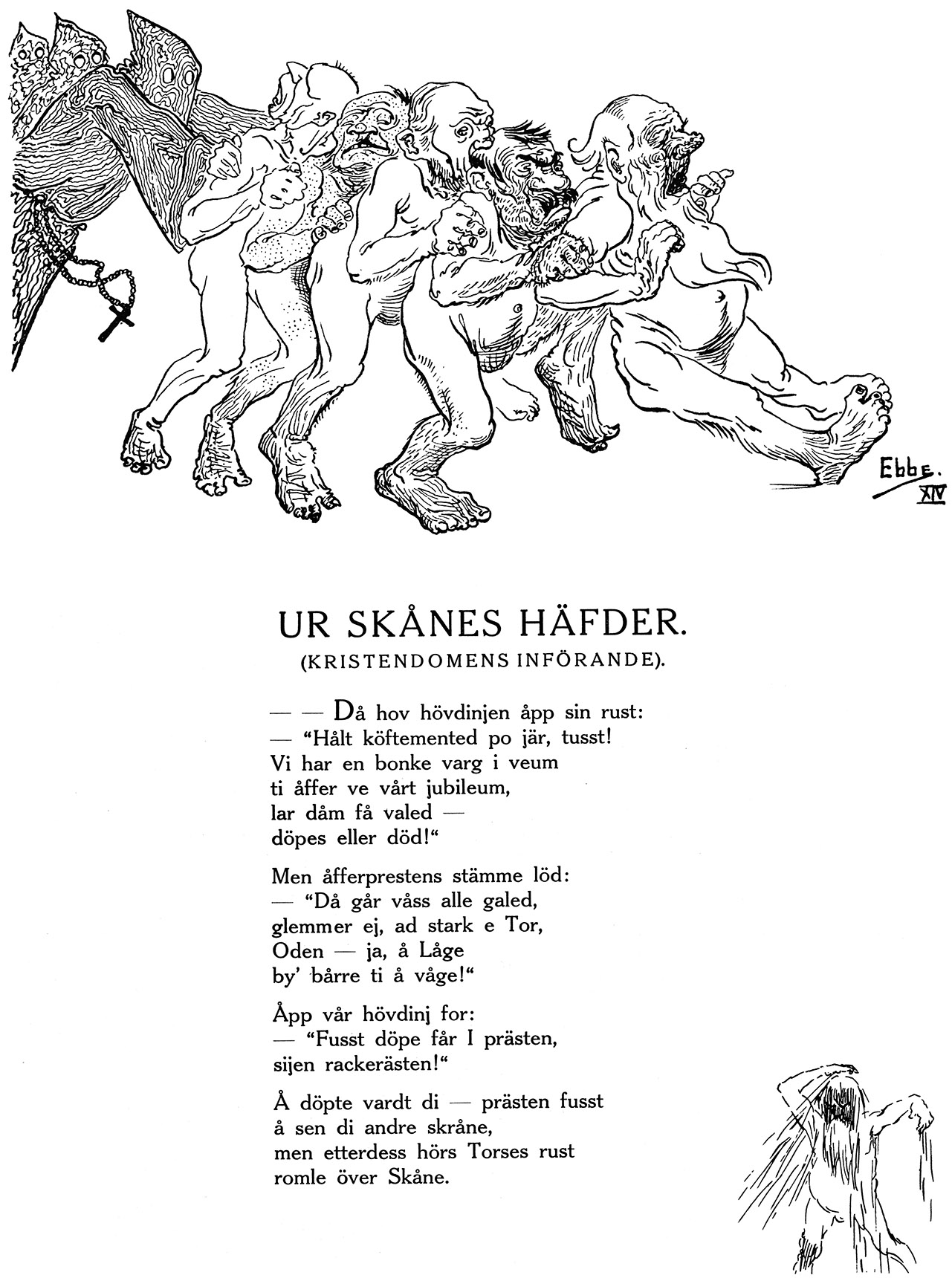
Axel Ebbe was also a skilled printmaker. He likely learned graphic techniques during his extended stay abroad in Europe’s major cities between 1897 and 1909.
Most of his prints were created using drypoint and aquatint.
His motifs often included animals, humorous characters, and gentle female figures. In several works, he adopted a folkloric and humorous style, drawing inspiration from the people of his native village. Some of his prints also carry a distinctly satirical tone.
Poetry was yet another artistic outlet for Axel Ebbe. His first literary work – the poetry collection Rijm o Rodevelske – was published in 1913.
Beautifully illustrated, the collection features tales of ghosts and mythical creatures. Ebbe began writing during his years abroad, spurred by homesickness and a deep affection for his native soil and hometown of Hököpinge.
In 1922, he published Heterogenesis – a title derived from Greek, meaning “mixed origin” or “diverse elements.” The book features photographs of several of his sculptures and poems written in both the Scanian dialect and standard Swedish, accompanied by Ebbe’s sharp and expressive illustrations.
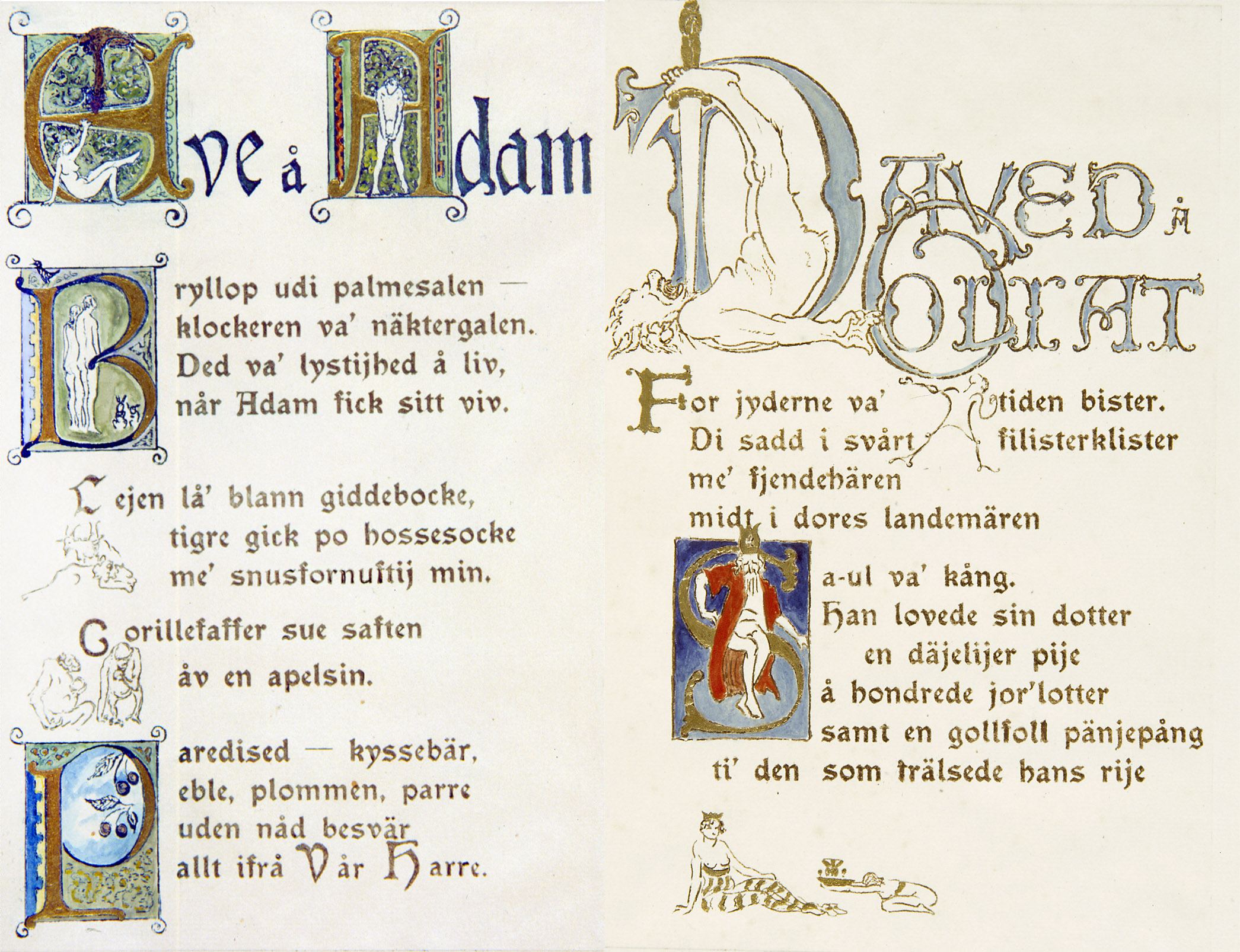
His third and most extensive literary work, Bibelsk Historie (“Biblical History”), was begun in 1936. This grand piece is the artist’s free interpretation of the Old Testament, written entirely in the Hököpinge dialect spoken in his birthplace.
The characters in the story are folkloric and borrow traits from the local people of his home region. Bibelsk Historie consists of a series of graphic prints, parts of which are on display at Axel Ebbes Art Hall. After his death, the work was published in book form.