The archaeological open-air museum
Experience the world’s only reconstructed Viking fortress in a unique archaeological open-air museum. In the midst of the modern city, a quarter of the ring fortress has been recreated on its exact original site. Here, you will also find a nature park, a medieval house, and a Viking farmstead that comes to life during the summer season.
The Viking fortress
Trelleborgen, as it appears today, is an interpretation of how the fortress may have looked during the second half of the 9th century, in its expanded phase. The fortress was equipped with a higher earthen rampart clad with split logs. The recreated quarter of the fortress was completed in 1995. The interpretation of the fortress’s appearance is based on a combination of archaeological research, traditional craftsmanship, and historical visual material from other fortresses.
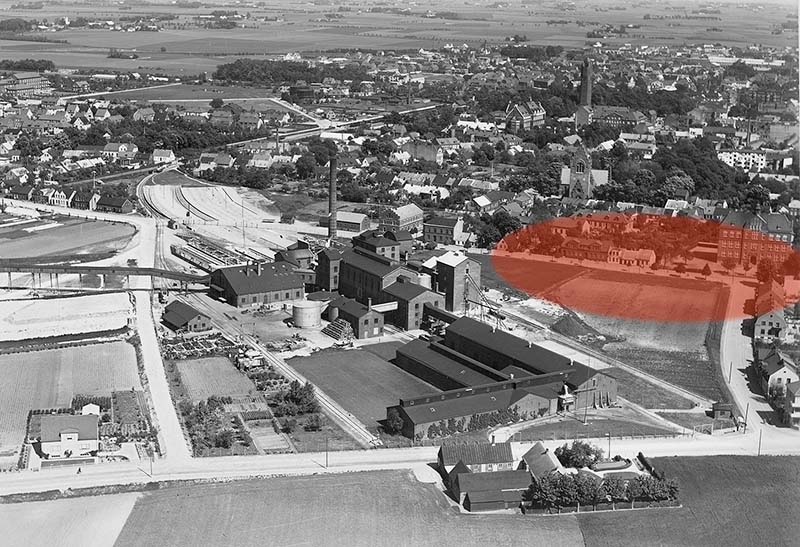
The layout of this recreated quarter faithfully follows the traces that archaeologists discovered in 1988. The same applies to the reconstructed western gate into the fortress.
Take a walk in the open-air museum and imagine how the Viking-age ring fortress may have appeared. The main gate of the fortress was located in the north, over today’s Bryggaregata, and was twice as wide as the reconstructed western gate. Today, a heavily trafficked road runs here, which has facilitated traffic to and from Trelleborg since the Viking Age and perhaps even earlier. In close proximity to the open-air museum, on sidewalks and in the parking lot between the modern buildings on the other side of the road, the curious can find traces in the form of cobblestones that partly mark the outline of the fortress and the fortress’s eastern gate.
The ring-shaped fortress had a diameter of approximately 144 meters and was surrounded by a moat connected to adjacent watercourses, symbolized today by the park’s pond. From the elevated fortress, there was good control over the passing ships. To the north, there were large farms, burial grounds, and villages. Further north, the power center of Uppåkra and the city of Lund were located.

The Viking farmstead
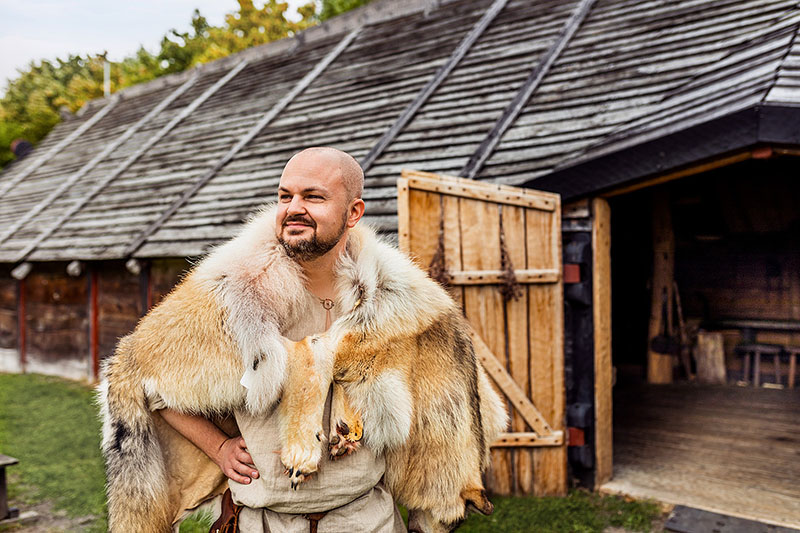
In the open-air museum, there is a reconstructed farm with a longhouse, pit houses and a garden. The longhouse serves as the actual residence and is meant to reflect a domestic environment. The pit house houses the farm’s blacksmith forge, and the garden cultivates crops such as beans, cabbage, flax, and plants for dyeing.
The houses contain objects and furnishings in Viking style. Some are replicas based on archaeological finds, while others are inspired by ancient texts, ethnological comparisons, and a touch of artistic freedom.
Archaeologists have not found traces of buildings either inside the fortress or in close proximity outside. The farm that is constructed today is inspired by farms as they appeared during the Late Iron Age when the frames of longhouses consisted of rows of paired poles that supported the roof. Such farms existed within walking distance north of the fortress, some with lengths of up to 50 meters. However, shorter longhouses and pit houses were present in the area before the fortress was built.
On the Viking farm, you will find one of Trelleborgen’s runestones. All the stones in the open-air museum are newly carved. A genuine runestone contemporaneous with the Viking fortress can be found at Tullstorps Church outside of Trelleborg.
The Medieval House
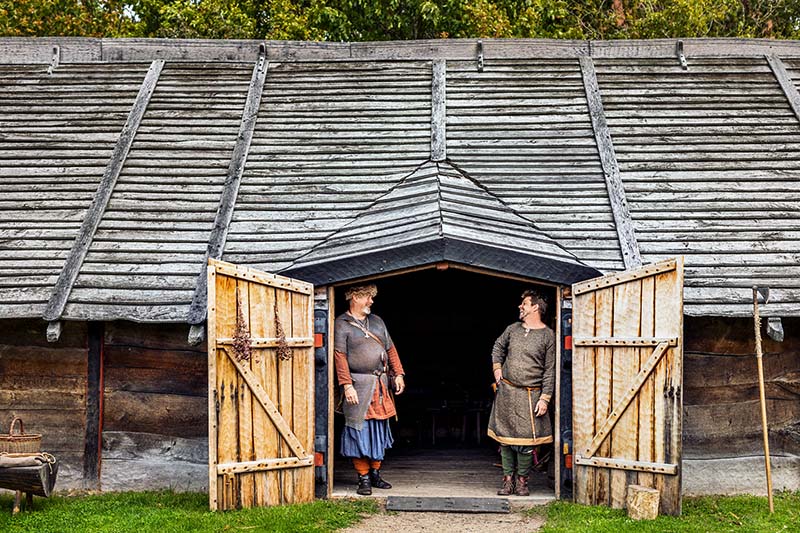
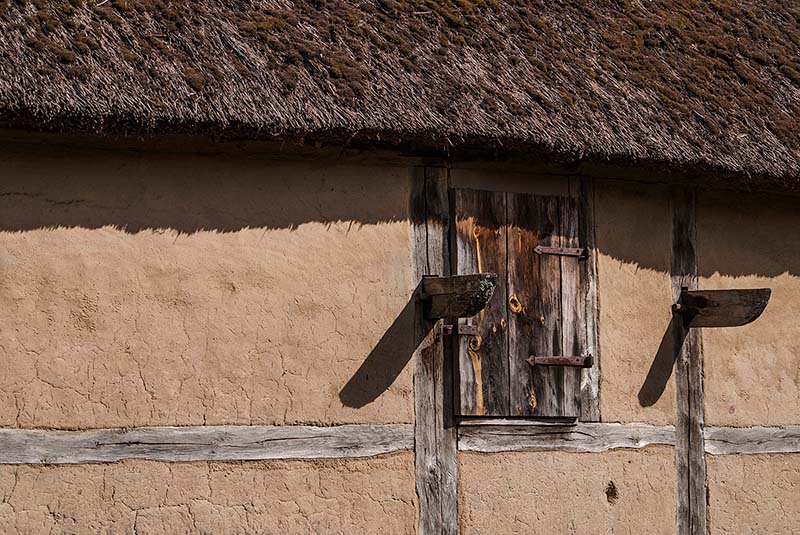
Inside the fortress wall at Bryggaregatan, there is a reconstructed medieval house. It is built on its original site to represent how it may have looked during the period of transition between the 1300s and 1400s. The house is only open on certain days during the summer season and by pre-booking. Take the time to visit during the summer and enjoy the courtyard’s hollyhocks and fragrant rose bushes.
On the other side of the road, east of the fortress area, you will see Saint Nicholas Church, a church that was founded in the 1200s. From the medieval house, you can also take a walk via Gamla torg (Old Square) to the ruins of the medieval Franciscan monastery.
The Park
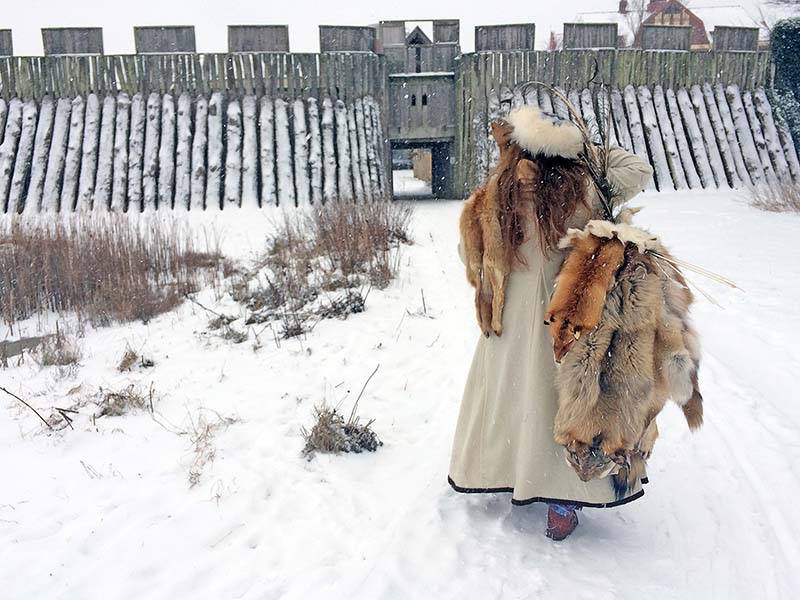
The natural environment thrives in the open-air museum. Butterflies and bumblebees flock around the meadow flowers. In the pond, frogs and fish live and thrive. Perhaps a heron stands at the water’s edge, waiting for a taste of something delicious? There are grassy areas suitable for picnics and play. During winter, the fortress wall serves as a temporary sledding hill for our younger visitors. We let the frogs and fish be in peace in the pond, even though there might be an occasional unkissed prince among them.

Exhibition

Activities
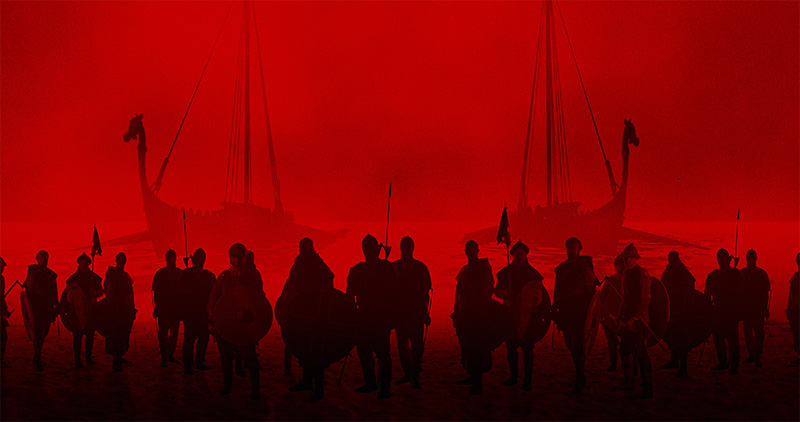
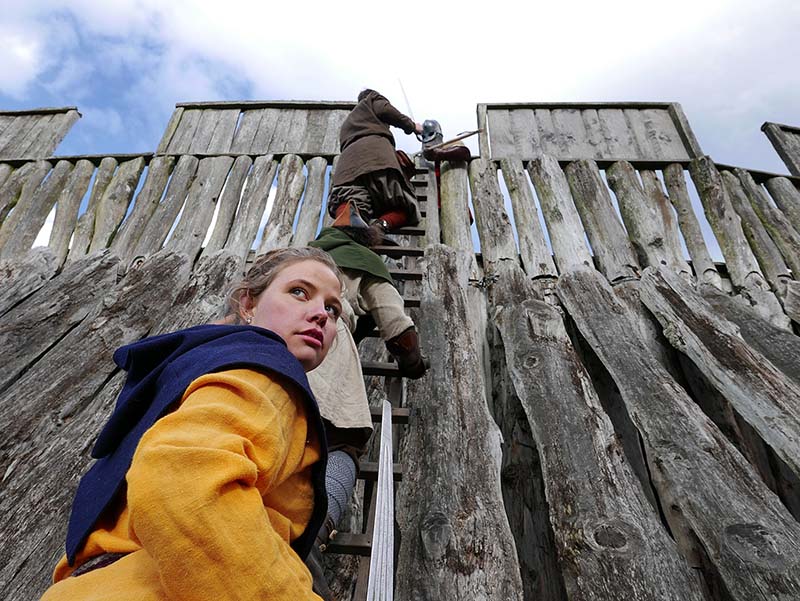
At Trelleborgen, history comes to life through guided tours and various events, both large and small. During school breaks, there are activities available for the little ones, and during the summer, there’s something happening every day. Here, you can experience Viking life, witness the Battle of Trelleborgen, and even get married in Viking style.
All year round at Trelleborgen
The outdoor museum park and outdoor areas are open for visitors daily, all year round. Groups can also pre-book guided tours of the area and the Viking Museum exhibition throughout the year. During the summer season, the Viking Museum and the Viking farmstead are open daily. Summer events can be found in the calendar. You will also find other events throughout the year, such as the autumn Wese Walk, the winter light festival, Easter holiday fun, and the spring Valborg bonfire.
The battle of Trelleborgen
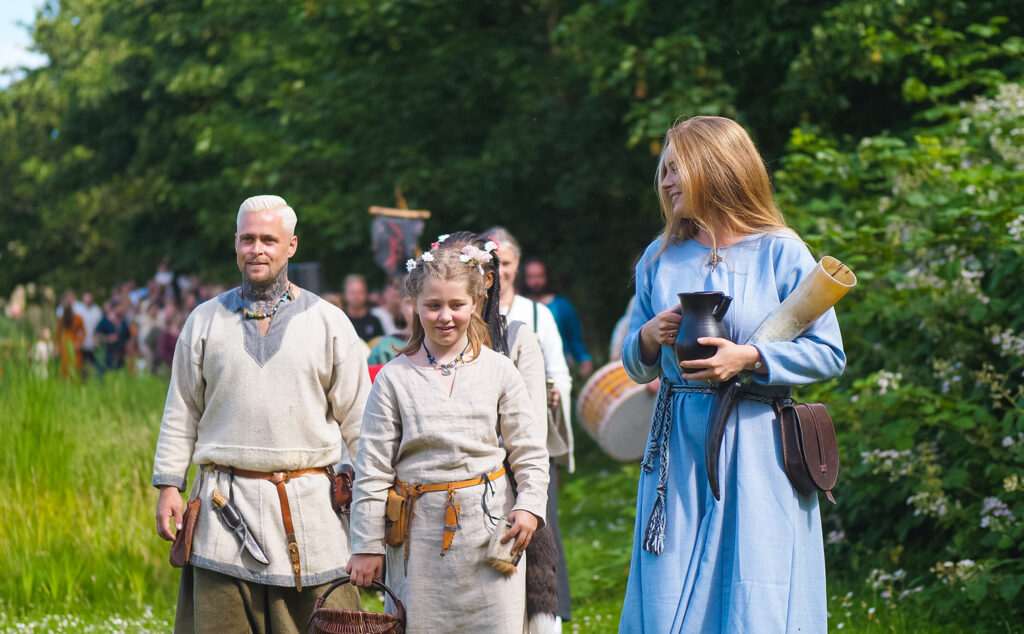
The second weekend following midsummer, the year’s major Viking event takes place: The battle of Trelleborgen. It features a market, shows, Vikings, music, crafts and much more!
This weekend, we gather for dear reunions and new encounters. Of course, there will also be a market, crafts, Viking games, try-outs, and last but certainly not least, the battle where the Vikings clash. Come and experience the Viking Age, feel the scents from the fires, and cheer for your favorite Vikings in the fight for the fortress. At the same time, a delightful Viking market is held, featuring fabrics, jewelry, and crafts from near and far. Dramatized events between the Vikings unfold from time to time. Perhaps as a visitor, you may find yourself in the midst of one of the market’s dramas? We are also looking forward to a beautiful Viking-style wedding ceremony on Friday. Everyone is welcome to witness as this year’s couple celebrates their love on Frigg’s Day itself.
Keep an eye on the calendar and on Facebook for updated information and daily programs.
Get married at Trelleborgen
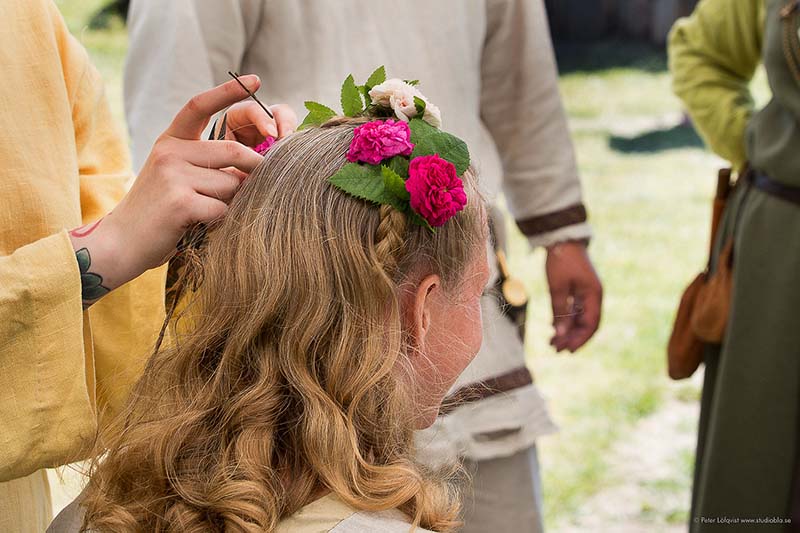
Are you interested in history or do you want your wedding to be a little different? Then Trelleborgen is the right place for you! At Trelleborgen, you can get married with a civil marriage officiant in Viking-era attire and surroundings. After the ceremony, you will receive a Viking-inspired marriage certificate specially created for weddings at Trelleborgen. The rules and formalities for a wedding at Trelleborgen are the same as for a civil wedding.
Contact us if you are interested in booking Trelleborgen for your wedding!
You can book a marriage officiant through Trelleborg Municipality’s customer service.
Experience the Viking life
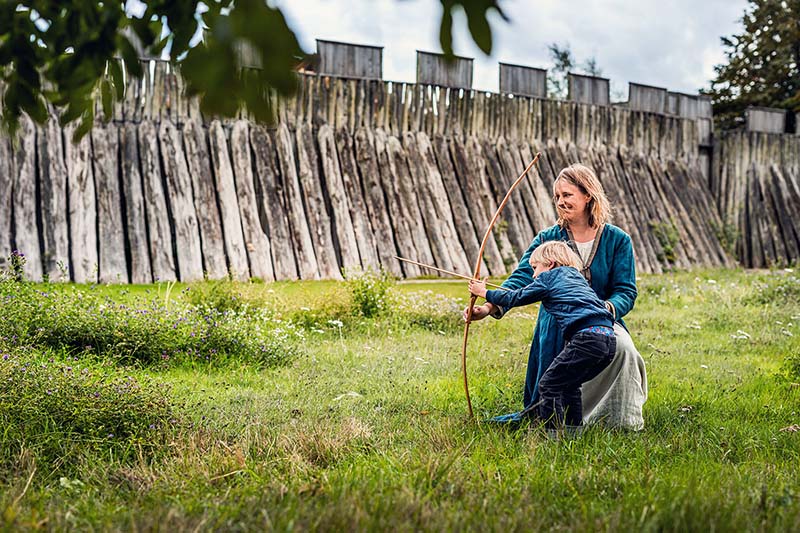
If you are between 8 and 13 years old, there is an opportunity for you to experience Viking life at Trelleborgen for a few days each summer. Together, we will travel back in time and experience the Viking Age, hear stories about gods and heroes, learn about archaeology, and try various activities such as archery, Viking crafts, and games.

Summer at Trelleborgen
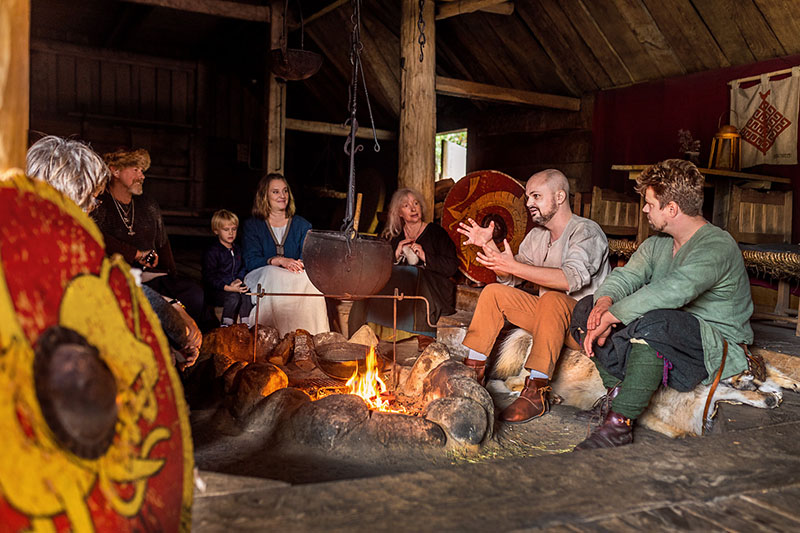
During the summer, Vikingamuseet is open everyday from the Monday after Midsummer until the end of August, from 10.00 to 17.00. Experience the Viking Age with all your senses at the farm where the Vikings welcome you into the longhouse. There’s something happening on the farm every day! Sometimes we take care of the cabbage garden, other times you might find us in the midst of a big bread baking session. We may be working on weaving, in the smithy, or practicing other crafts. The tasks can vary throughout the day and change throughout the week. For those who want to plan which Viking activities to participate in, you can find the summer program in the calendar. There you will also find information about our major events during the summer such as the Battle of Trelleborgen, medieval days, archery days, themed events, and workshops. Welcome to the Viking-era Trelleborgen!

Archeology and history
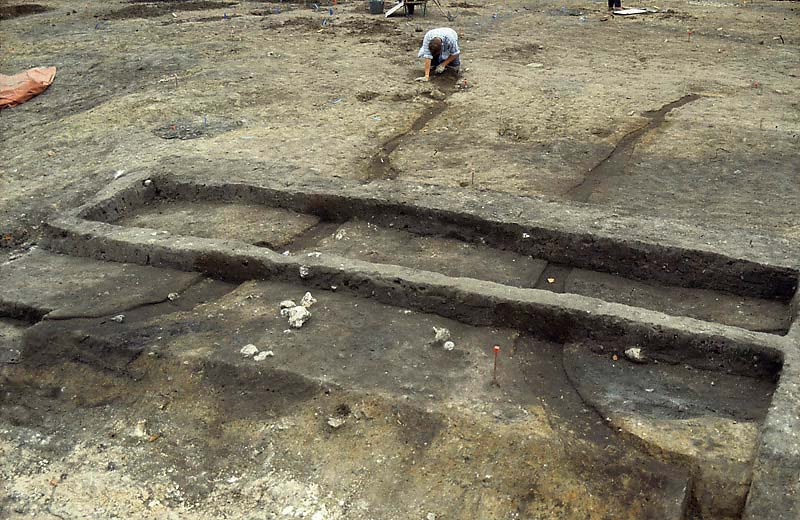
The placement of the reconstructed quarter of the castle is exactly the same as it was during the Viking Age. The traces of the logs were so clear in the ground during the archaeological excavation of the area that the archaeologists could document them carefully. However, the site hides a history that extends far beyond the Viking Age.
Kattebäckshejdan
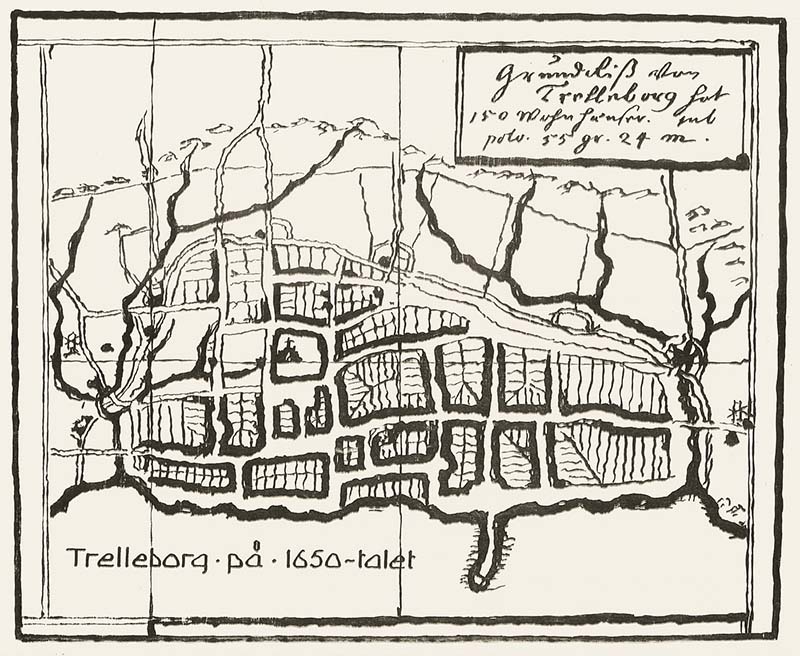
The city of Trelleborg emerged on the beach ridge right next to the sea. The ridge was penetrated by rivers and streams that eventually reached the Baltic Sea. Behind the beach ridge, ponds and lagoons were formed. The rivers and ponds that framed the old Trelleborg can be seen on older maps and are evident in today’s neighborhood and street names, such as Valldamsgatan. Behind the beach ridge, there were two elevated plateaus. The larger one, called Kattebäckshejdan, has been investigated by archaeologists on several occasions. It is on this elevation that the Viking fortress was discovered, and it is also where Trelleborg with the Viking Museum is located today. On the smaller elevation, a church was built in the 13th century, and this church still stands today, although heavily rebuilt.
The archaeology on the larger of the elevations is most famous for the Viking fortress discovered in the late 1980s. However, the site also concealed remains from other time periods. Tools made of flint, grinding stones, ceramics, and pits from the Neolithic period were found here. During a part of the Bronze Age, there was a house estimated to be 26 meters long and 7 meters wide. Ceramic artifacts, roughly worked flint, parts of grinding stones, and two graves dating back to the Bronze Age were also discovered in the area. One of the graves contained a remarkable bronze dagger.
It was during the later part of the Iron Age that the settlement grew significantly and left abundant remains in the form of postholes from houses, hearths, pits, and objects. The Viking Age fortress seems to have largely replaced this settlement, at least on this elevation. The reason for choosing to build a fortress on this elevation remains somewhat of a mystery. Was this one of Harald Bluetooth’s ring fortresses, a so-called Trelleborg, built with the purpose of unifying and Christianizing Denmark? One thing is certain, the fortress was constructed in a well-chosen location near the Baltic Sea. The strategic position was likely of interest to both regional and local power elites.
Trelleborg seems to have been abandoned as early as the beginning of the 11th century. After the fortress was abandoned, the area appears to have been uninhabited and relatively devoid of activity for 200 years, only to flourish again during the 13th century and onwards with extensive medieval urban development. Archaeologists have found several traces of buildings and objects from the 13th century and beyond. By then, Trelleborg, which inherited its name from the Viking fortress, had become a prosperous medieval town with a marketplace, church, and monastery. In the 14th century, the site of the former fortress began to be populated with longhouses whose gables faced the road that once passed through the fortress. At this time, parts of Trelleborg’s rampart were likely still visible as a boundary leading out of the city to the west.
Sockerbruket
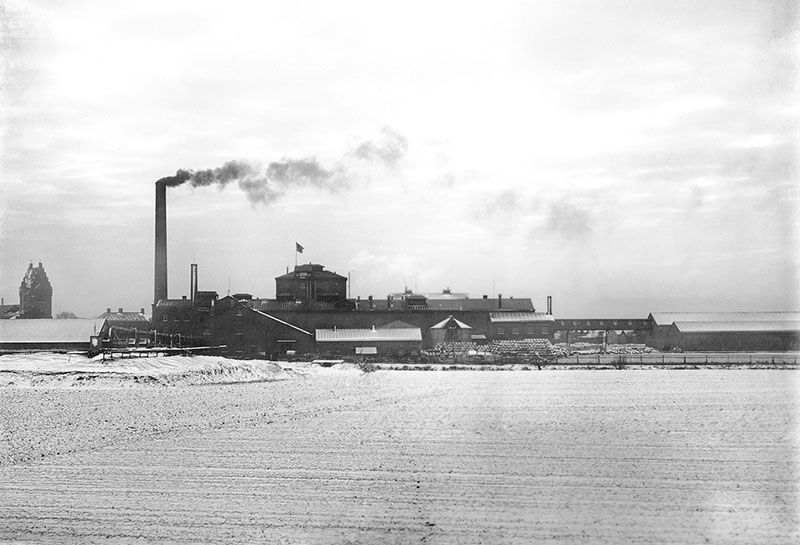
The elevation where the Viking fortress was discovered holds several stories. A hundred years ago, a sugar refinery stood here. The office building, constructed in 1898, still stands next to the reconstructed Viking fortress on Gråbrödersgatan.
The sugar refinery was founded in 1888 by the entrepreneurial merchant Carl Smith, who is portrayed in one of the paintings in the exhibition “Stadsliv” at Trelleborgs Museum (link to the exhibition). In 1897, they processed 500 tons of sugar beets per day. These had to be transported, washed, and go through a series of processes before the sugar crystals were separated from the beet mass as raw sugar. The sugar was collected in 100-kilogram sacks, loaded onto railway wagons, and transported on roads to the harbor, where they were loaded onto ships. It was a very labor-intensive process! Over time, the process was modernized and streamlined. Old steam engines were replaced with electric motors powered by the plant’s own electric power station. Loose sugar was conveyed via conveyor belts and elevators. It was then transported by tank trucks to silo warehouses at the harbor to be loaded onto ships. The manual labor of carrying 100-kilogram sacks was a thing of the past. In 1946, they processed 2,000 tons of beets per day, yielding around 18,000 tons of sugar. The refinery was shut down in 1955, and the buildings were repurposed. In 1989, the entire facility was demolished, and it was then that the traces of the Viking fortress came to light.
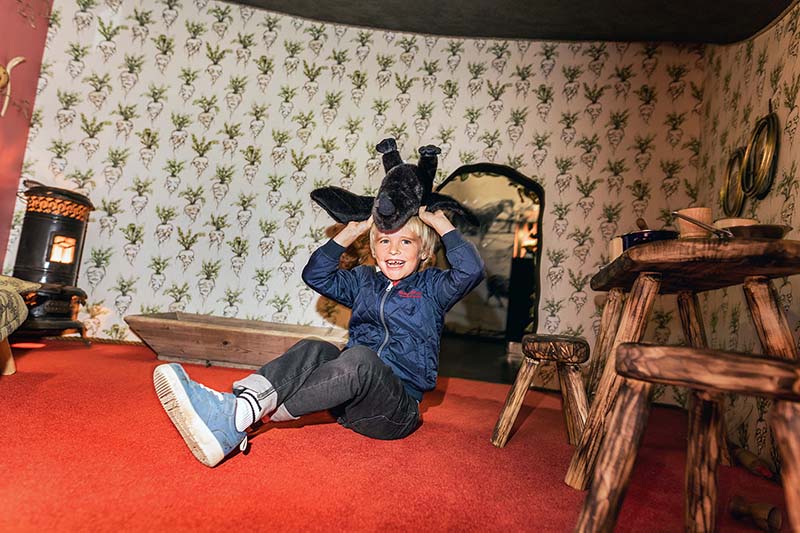
For Children
Upcoming
School
At Trelleborg Museum, we offer school programs for all ages. We can also create customized programs based on your specific requests.
Shop and Café
Welcome to the Viking Museum’s shop and Café Oden! The shop’s assortment has a clear Viking and Iron Age theme and you can find unique souvenirs for all ages. You can also enjoy a coffee break at Café Oden with a nature-inspired view of Trelleborgen and its surrounding park area. We offer both indoor and outdoor seating.
If you have any questions about Trelleborgen’s shop and café please email amanda.casselstal@trelleborg.se.
Info Point
The Viking museum Trelleborgen is an Info Point through Visit Trelleborg. Here you can find information about what you can experience in the municipality of Trelleborg.
If you have specific questions, simply scan the Info Point’s QR code with your phone to chat directly with the staff at Visit Trelleborg.